
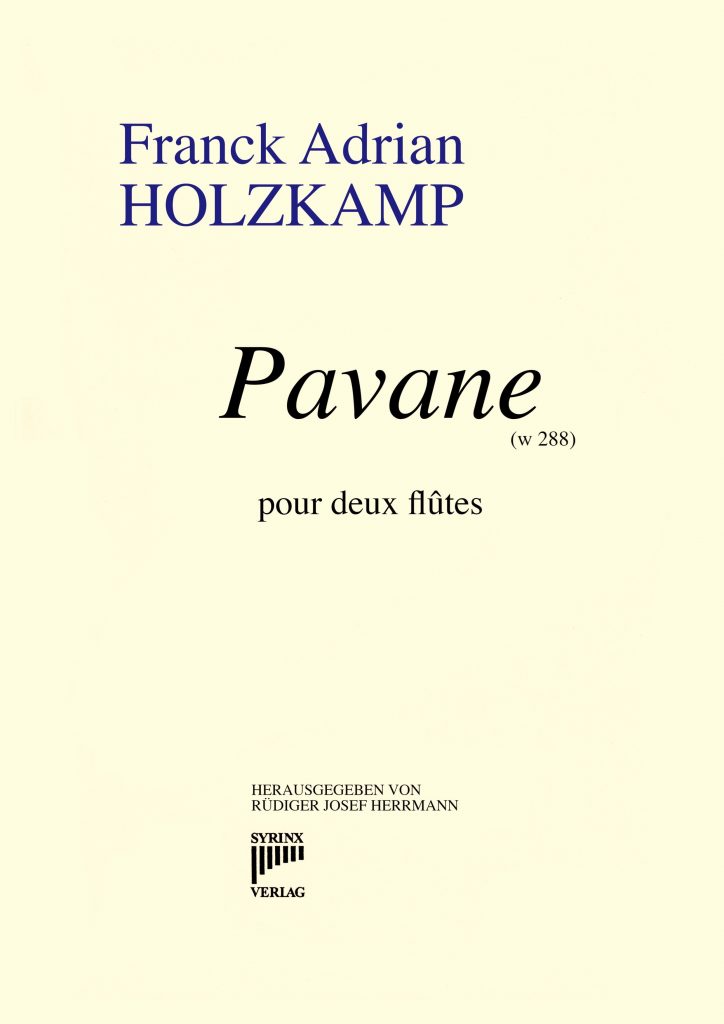
La Pavane (w 288)
für zwei Flöten
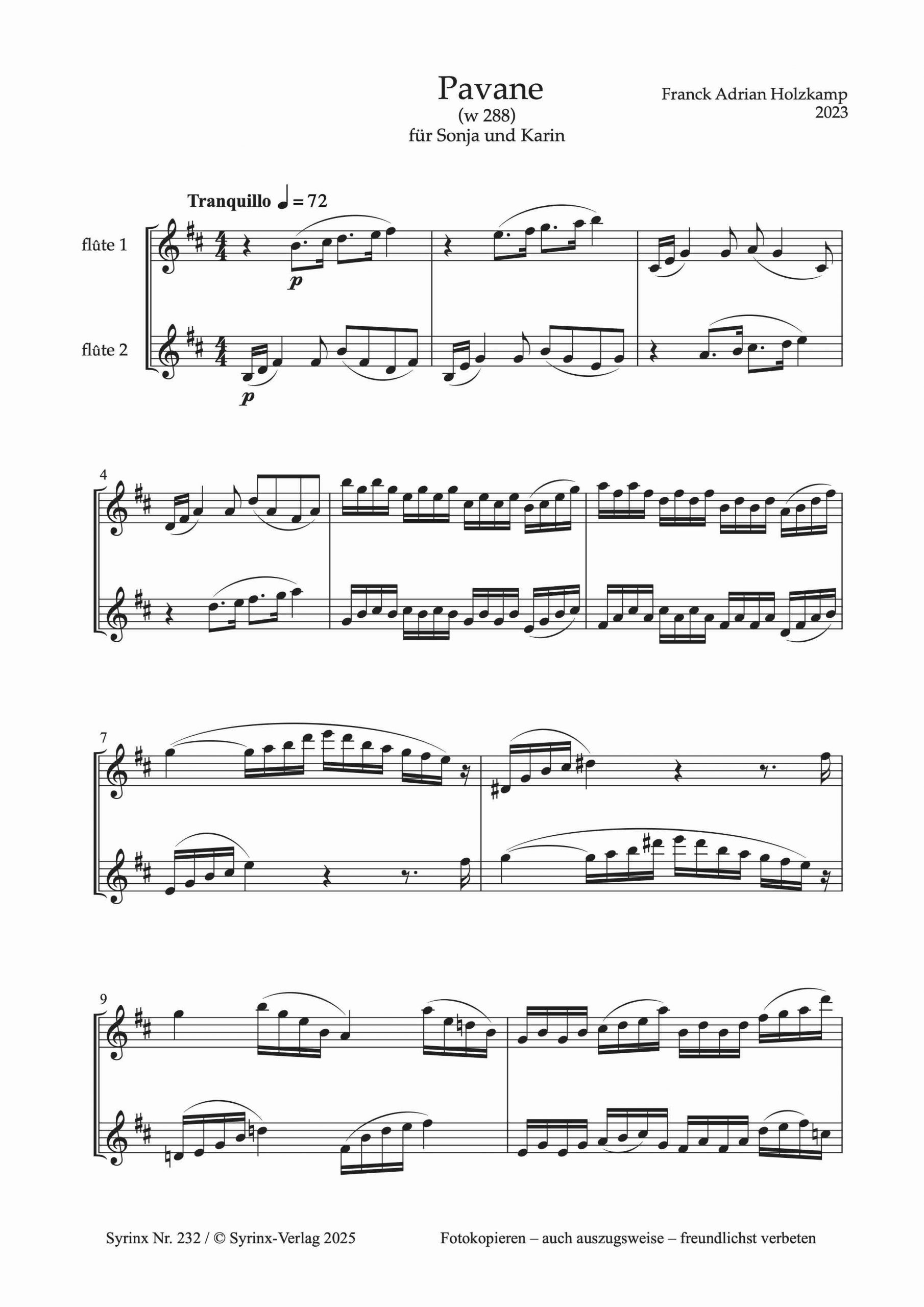
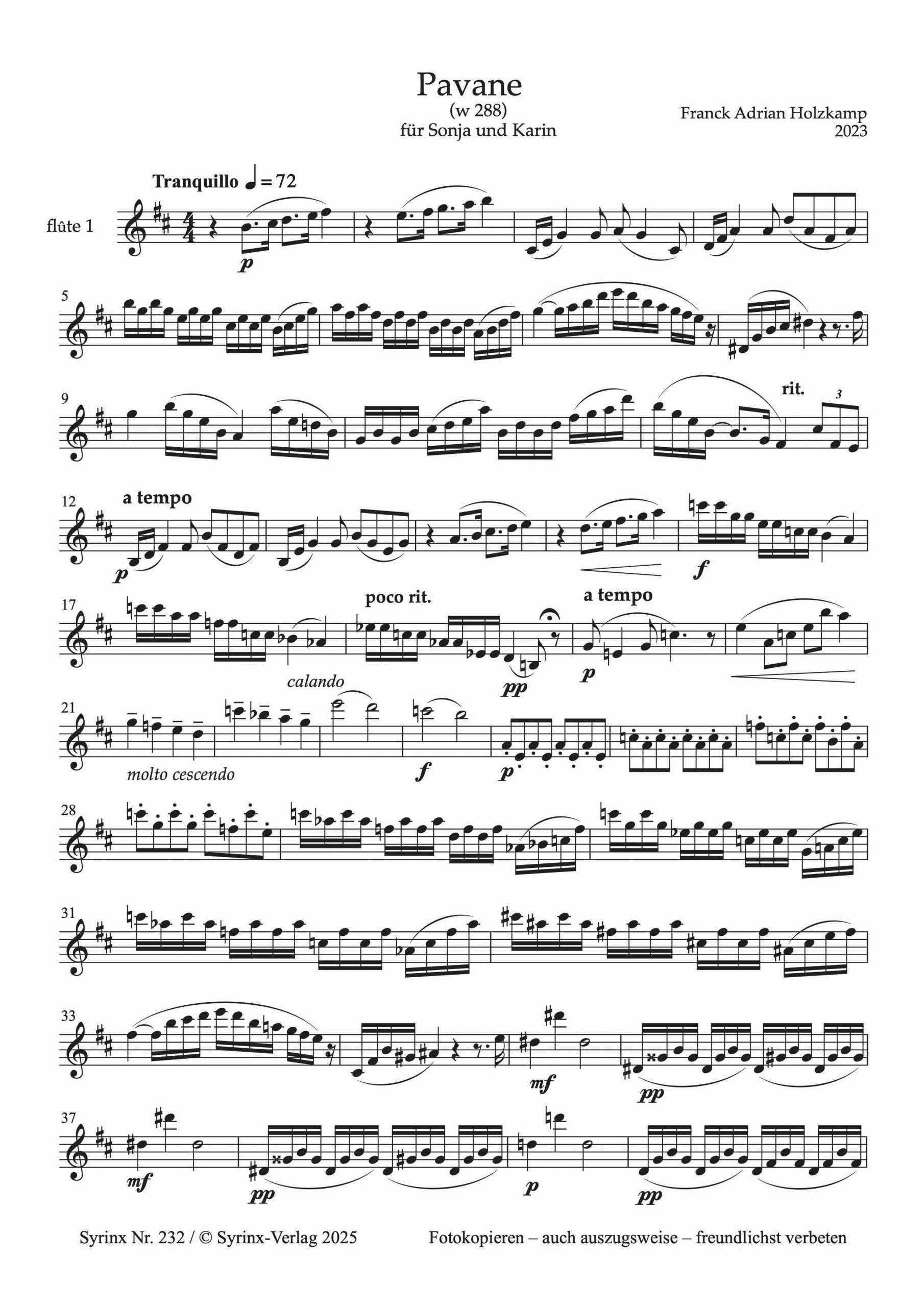
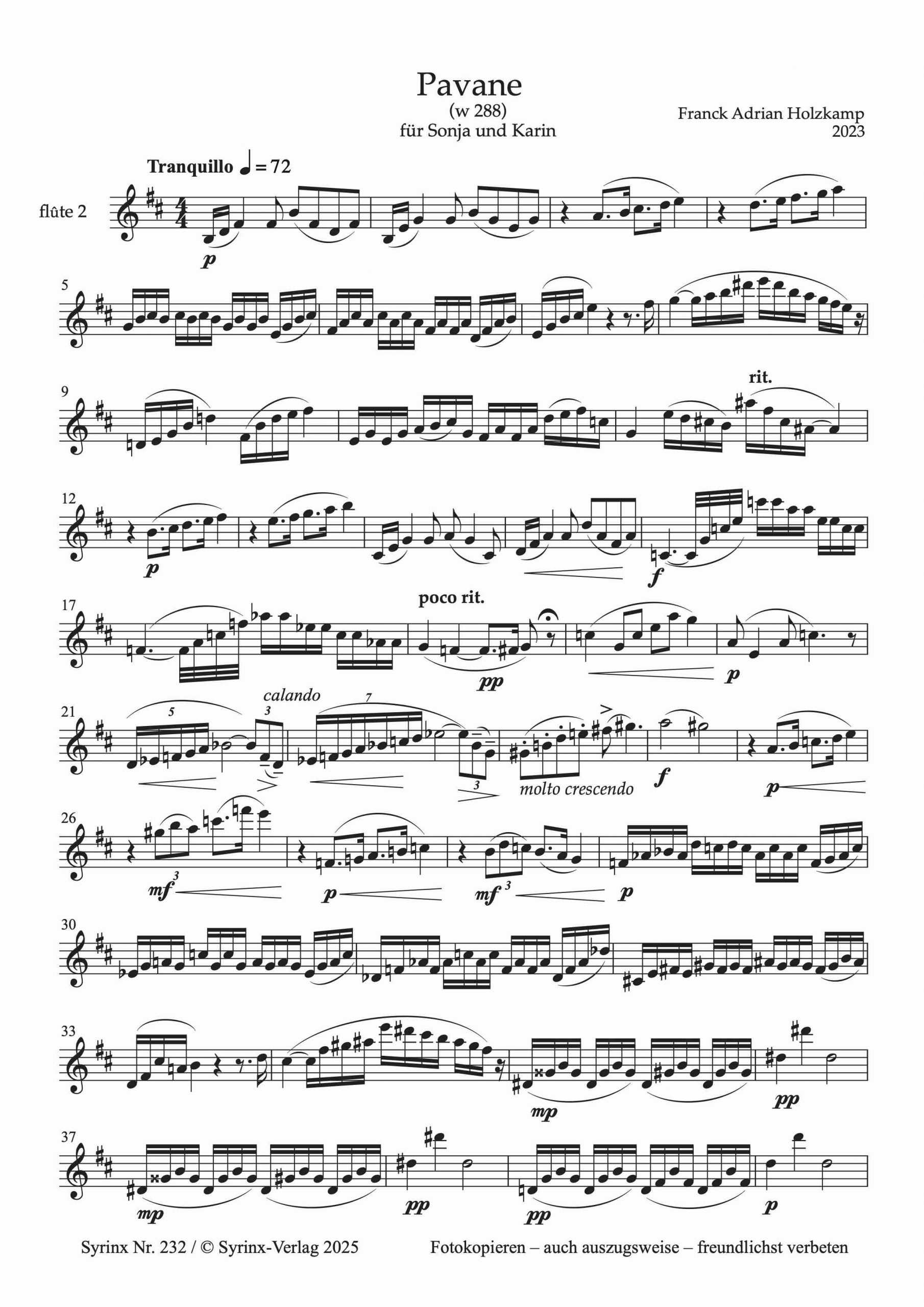
Syrinx Nr. 232
Franck Adrian Holzkamp
La Pavane
für zwei Flöten
Partitur und zwei Stimmen
Herausgegeben von Rüdiger Josef Herrmann
2 Flöten
18,00 €
Vorwort
Bei der Pavane (von spanisch Pavo = Pfau) handelt es sich um einen gravitätischen gradtaktigen Schreittanz, im 17. Jahrhundert als Kopfsatz der Suite häufig gekoppelt mit der tripeltaktigen Gagliarde. In England wandelte sich diese Form – der melancholischen Mode entsprechend – vor allem zur Trauerpavane (Sad Pavan) von Thomas Tomkins, John Dowland, Orlando Gibbons und William Byrd.
Glenn Gould brachte diese Musik 1971 auf den modernen Konzertflügel und belegte damit eindrucksvoll, dass diese Musik – auch außerhalb ihres zeitgenössischen, häufig zweckgebunden Kontextes – funktioniert.
Nun, nicht nur aufgrund der großen historischen Vorbilder… wer heute eine Pavane schreibt, bewegt sich in sehr großen Fußstapfen.
Ich denke da vor allem an die beiden wunderbaren nachempfundenen Werke von Maurice Ravel und Gabriel Fauré, die meine ersten Pavanen waren und mich von Anfang an begeisterten und entzückten.
Daher ist auch La Pavane für mich – trotz der pfauenhaften spanischen Abstammung – vor allem immer etwas sehr Französisches gewesen … die manchmal auch sanften Wellen der Bretagne, die Düfte des abendlichen Paris und die südfranzösischen Landschaften im Mondenschein. Meine Pavane jedenfalls träumt von Frankreich und von nächtlicher Liebe.
Franck Adrian Holzkamp
München im November 2025
Preface
The pavane (from the Spanish pavo = peacock) is a solemn, even measured dance, often paired in the 17th century with the triple-time gagliarde as the first movement of a suite. In England, in keeping with the melancholic fashion of the time, this form evolved primarily into the mournful pavane – Sad Pavan – by Thomas Tomkins, John Dowland, Orlando Gibbons and William Byrd.
Glenn Gould performed this music on the modern concert grand piano in 1971, impressively demonstrating that this music works even outside its contemporary, often purpose-built context.
Well, not only because of the great historical precedents … anyone writing a pavane today has very big shoes to fill. I am thinking in particular of the two wonderful reinterpretations by Maurice Ravel and Gabriel Fauré, which were my first pavanes and which thrilled and delighted me from the very beginning.
That is why, for me, La Pavane – despite its peacock-like Spanish origin – has always been something very French …
the sometimes gentle waves of Brittany, the scents of Paris in the evening and the landscapes of southern France in the moonlight.
In any case, my pavane dreams of France and of nocturnal love.
Franck Adrian Holzkamp
Munich, November 2025