
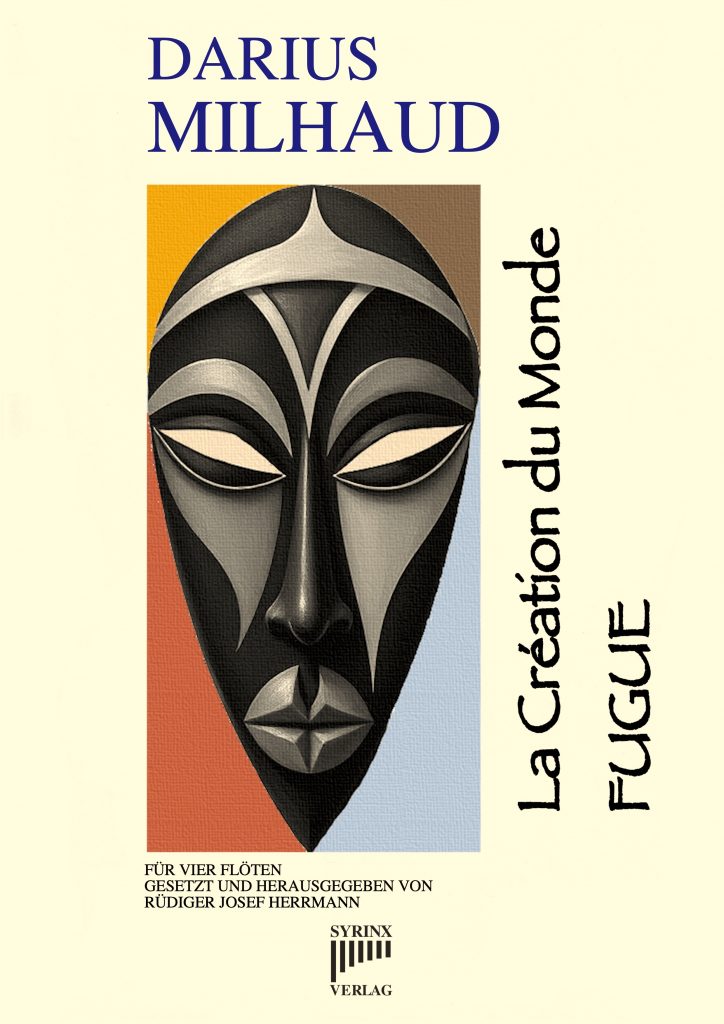
„La Création du Monde“ (Fugue) für 4 Flöten
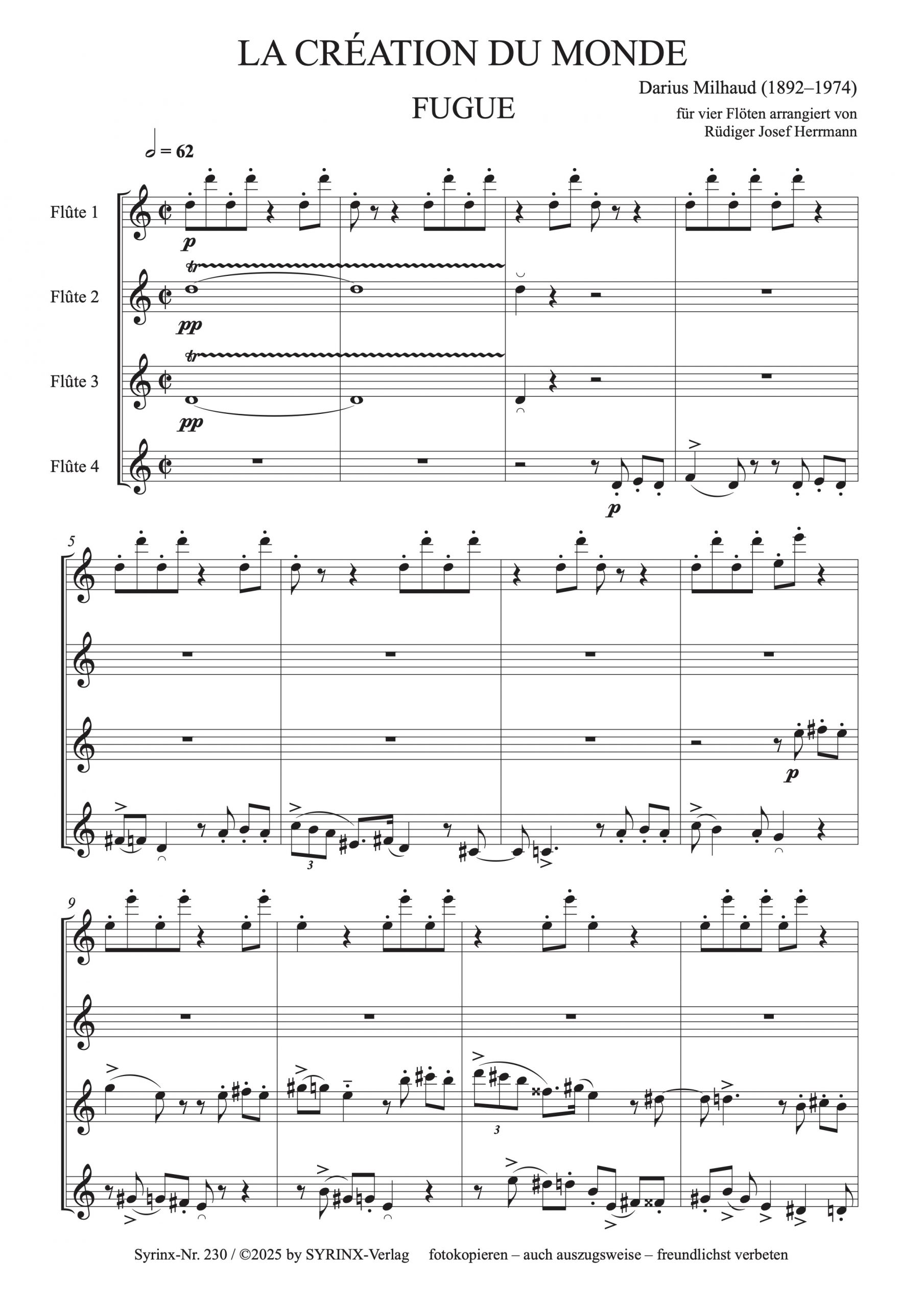
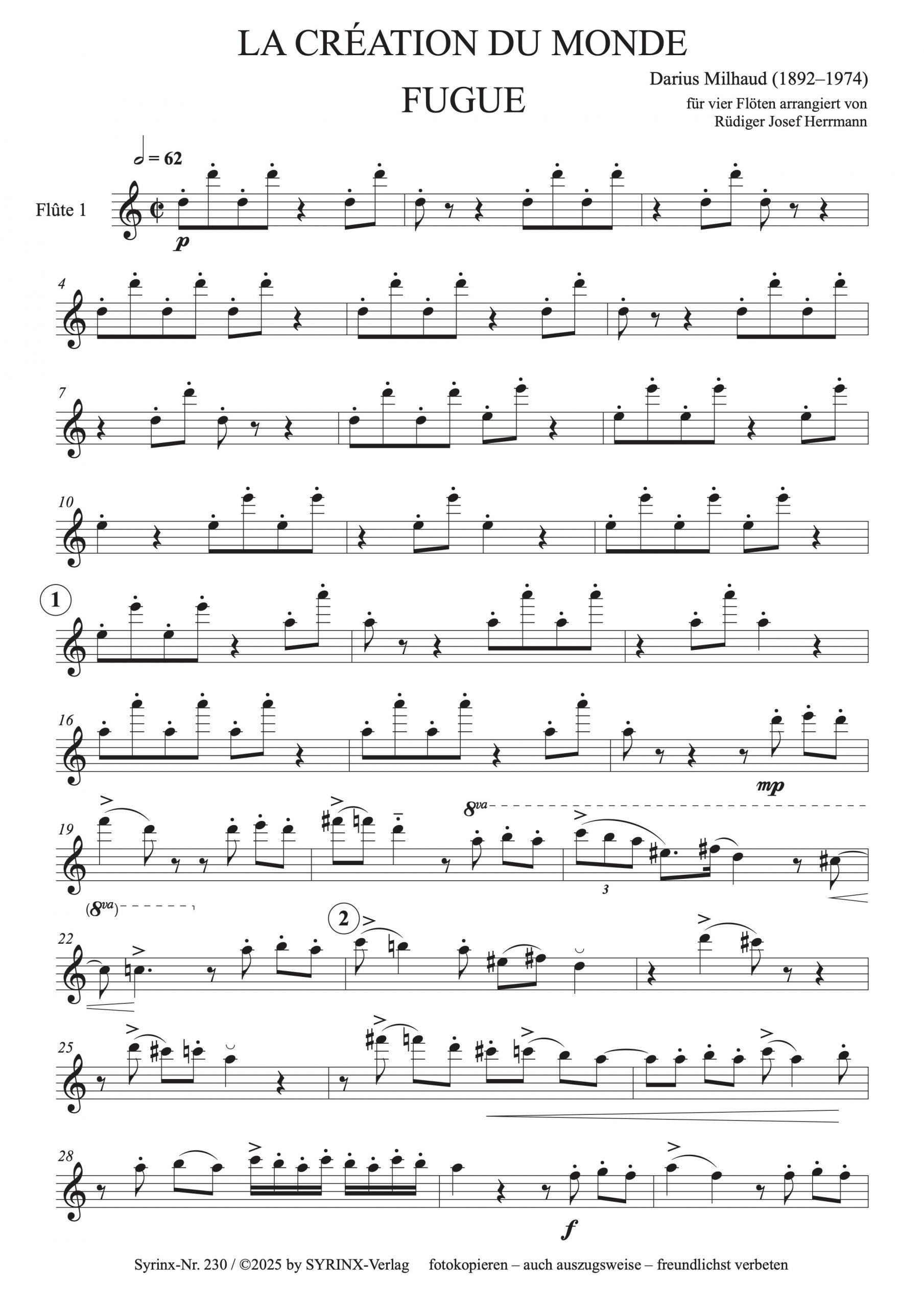
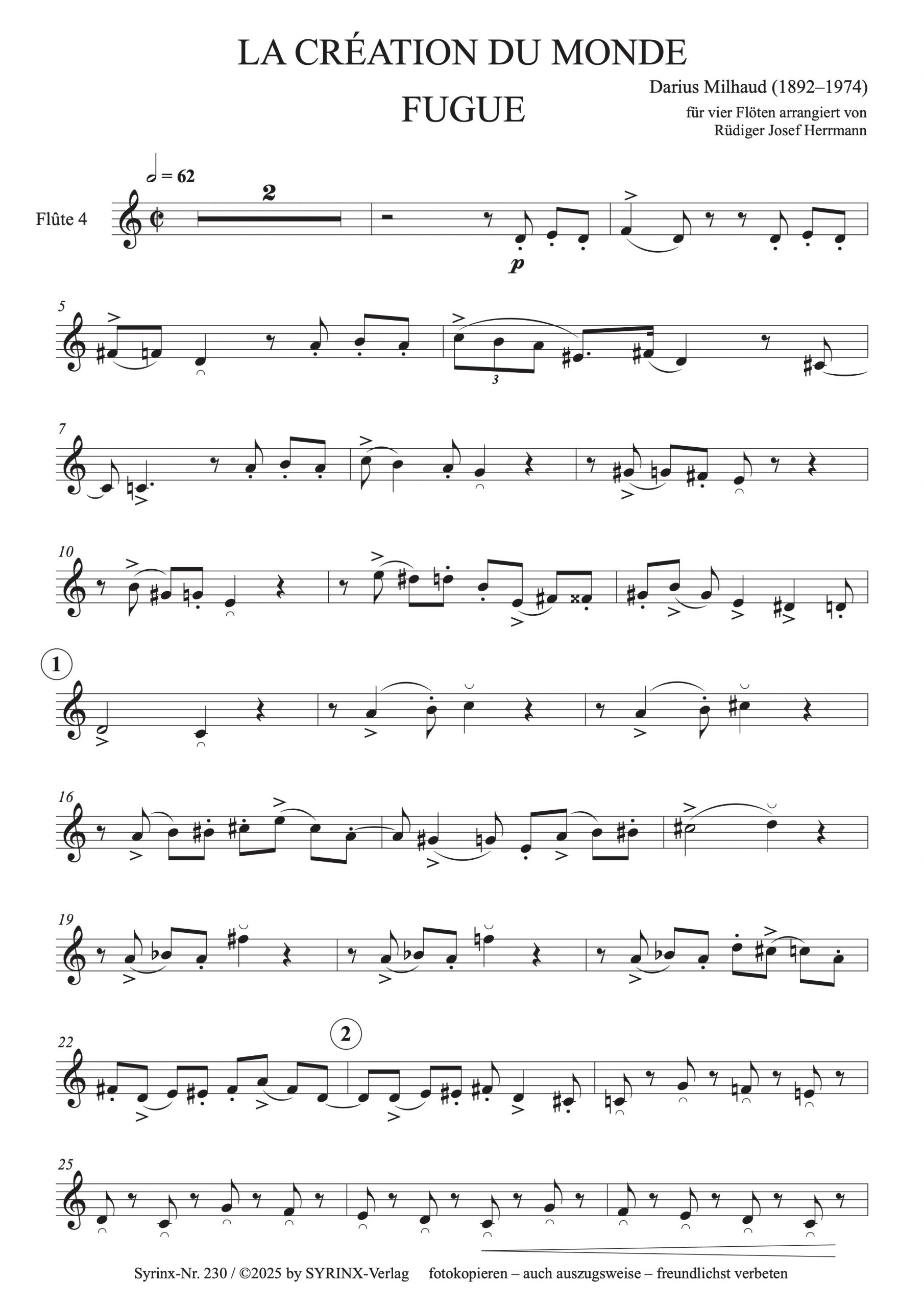
Syrinx Nr. 230
Darius Milhaud
La Création du Monde (Fugue)
Fassung für vier Flöten / Setting for four flutes
Gesetzt und herausgegeben von Rüdiger Josef Herrmann
Partitur und 4 Stimmen (1./2./3./4. Flöte)
4 Flöten
22.– €
Vorwort
Das künstlerische Paris zu Beginn des 20. Jahrhunderts war bestimmt von innovativen Ideen und einer Ablehnung traditioneller Normen. Bedeutende Persönlichkeiten wie Djaghilew, Strawinsky, Picasso, Cocteau, Satie, Honegger und Milhaud prägten diese Zeit.
Darius Milhaud (1892–1974), aus Aix-en-Provence stammend, war ein bedeutender Vertreter dieser Bewegung. Er lehnte die traditionelle Harmonielehre ab und schloss sich nach dem I. Weltkrieg der Groupe des Six an. Seine Kompositionen, die oft Polyrhythmik und Polytonalität nutzen, wurden zunächst kontrovers aufgenommen.
Besonders bekannt ist seine Jazz-inspirierte Ballettmusik La Création du Monde (1923), die afrikanische Kunst und Kultur – speziell den Schöpfungsmythos des schwarzen Kontinents – aufgreift. Milhaud schuf eine etwa 15-minütige Partitur, die in fünf Abschnitte unterteilt war: Prélude, Fugue, Romance, Scherzo und Final.
Im zweiten Abschnitt, einer Jazz-Fuge, offenbart sich die afrikanisch-inspirierte Musik Milhauds in besonderem Maß. Hier spiegeln Blue-Notes, Polyrhythmik und synkopenreiche Rumba-Akzentuierungen zusätzlich die Handlung wider, nämlich den Zustand der Unordnung und des Chaos vor der Schöpfung.
Mit der vorliegenden Flötenquartett-Fassung von Milhauds Création du Monde setzt der SYRINX-Verlag die Reihe seiner pädagogisch-intendierten Ensemble-Arrangements fort – bietet doch die gegenwärtige Adaption eine der seltenen Gelegenheiten, sich als Flötist mit der vom Jazz angeregten Musiksprache eines der innovativsten Komponisten des 20. Jh.s vertraut zu machen. Auf die Verwendung der Artikulationsvorschrift suonato als »glockig angeschlagene, vorwärts schreitende« Trennungsart sei explizite hingewiesen.
Rüdiger Josef Herrmann
Riemerling / Ottobrunn, Januar 2026
Preface
Artistic life in Paris at the beginning of the 20th century was characterised by innovative ideas and a rejection of traditional norms. Prominent figures such as Diaghilev, Stravinsky, Picasso, Cocteau, Satie, Honegger and Milhaud shaped this era.
Darius Milhaud (1892–1974), a native of Aix-en-Provence, was a leading figure in this movement. He rejected traditional harmony and joined the Groupe des Six after the First World War. His compositions, which often employ polyrhythm and polytonality, were initially met with controversy. Particularly well-known is his jazz-inspired ballet music La Création du Monde (1923), which reflects African art and culture – specifically the creation myth of the African continent.
Milhaud composed a score of around 15 minutes, divided into five sections: Prélude, Fugue, Romance, Scherzo and Final.
In the second section, a jazz fugue, Milhaud’s African-inspired music is particularly evident. Here, blue notes, polyrhythm and syncopated rumba accents further reflect the plot, namely the state of disorder and chaos prior to creation.
With this flute quartet version of Milhaud’s Création du Monde, the SYRINX publishing house continues its series of ensemble arrangements designed for educational purposes – as this adaptation offers one of the rare opportunities for flutists to familiarise themselves with the jazz-inspired musical language of one of the 20th century’s most innovative composers.
Explicit reference should be made to the use of the articulation marking suonato as a ‘bell-like, forward-moving’ type of separation.
Rüdiger Josef Herrmann
Riemerling / Ottobrunn, January 2026